The Importance of IR Rejection for Your Car This Summer
Summer brings long, sunny days and warm weather that many enjoy. But for car owners, it also means dealing with intense heat inside vehicles. One key technology that can make a big difference during hot months is infrared (IR) rejection. This feature helps keep your car cooler, protects its interior, and improves comfort on every drive.
Understanding why IR rejection matters can help you make smart choices about window films, coatings, or glass upgrades for your vehicle. This article explains what IR rejection is, how it works, and why it is essential for your car this summer.
What Is IR Rejection and How Does It Work?
Infrared radiation is a type of light energy invisible to the human eye but felt as heat. When sunlight hits your car, a large portion of the heat comes from infrared rays penetrating through the windows. This heat builds up inside, making the cabin uncomfortably hot.
IR rejection refers to the ability of certain materials, like window films or glass coatings, to block or reflect infrared rays before they enter the car. By reducing the amount of IR radiation that passes through, these materials keep the interior cooler without significantly darkening the windows or reducing visibility.
How IR Rejection Differs from UV Protection
While both IR rejection and UV protection improve comfort and safety, they target different parts of sunlight:
UV protection blocks ultraviolet rays that cause skin damage and fade car interiors.
IR rejection blocks infrared rays that generate heat inside the vehicle.
Many modern window films combine both features, but IR rejection is especially important for managing temperature.
Benefits of IR Rejection for Your Car This Summer
Keeps Your Car Cooler
The most immediate benefit of IR rejection is a cooler cabin temperature. Studies show that cars without IR rejection can reach temperatures over 140°F (60°C) on a sunny day. With effective IR rejection, interior temperatures can drop by 20 to 30 degrees Fahrenheit, making a huge difference in comfort.
Reduces Air Conditioning Use
When your car stays cooler naturally, you rely less on air conditioning. This reduces fuel consumption and lowers emissions, saving money and helping the environment. It also means your AC system experiences less strain, potentially extending its lifespan.
Protects Interior Materials
Heat damages car interiors over time. Leather seats can crack, dashboards can warp, and plastics can fade or become brittle. IR rejection slows this damage by limiting heat exposure, helping your car’s interior look newer for longer.
Enhances Driving Comfort and Safety
A cooler car means less sweating and discomfort while driving. It also reduces glare caused by intense sunlight heating the cabin. Comfortable drivers stay focused and alert, improving safety on the road.
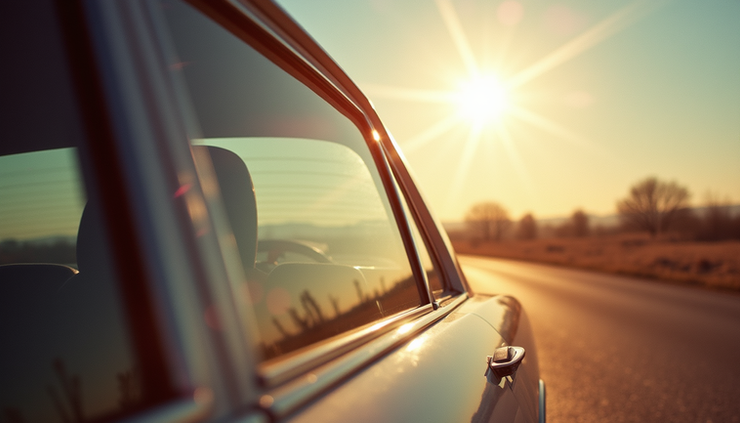
Close-up of a car window showing IR rejection film reflecting sunlight to reduce heat inside the vehicle.
How to Choose the Right IR Rejection Solution for Your Car
Window Films
Window films are the most popular and cost-effective way to add IR rejection. They come in various types:
Dyed films: Provide some heat reduction but limited IR rejection.
Metalized films: Reflect heat well but can interfere with electronics.
Ceramic films: Offer excellent IR rejection without affecting signals or visibility.
Ceramic films are often the best choice for summer heat management.
Factory-Tinted or Coated Glass
Some newer cars come with factory-installed IR-rejecting glass. This glass uses special coatings to block infrared rays while maintaining clarity. If your car doesn’t have this, aftermarket options are available.
Professional Installation
Proper installation is crucial for IR rejection products to work effectively. Poorly applied films can bubble, peel, or reduce visibility. Always choose a reputable installer with experience in IR rejection technology.
Practical Tips to Maximize IR Rejection Benefits
Park in the shade whenever possible to reduce direct sunlight exposure.
Use sunshades on the windshield to block sunlight when parked.
Keep windows slightly cracked open if safe, allowing heat to escape.
Combine IR rejection films with UV protection for full-spectrum sun defense.
Regularly clean your windows and films to maintain clarity and performance.
Common Myths About IR Rejection
Myth: Darker tint means better heat rejection.
Dark tint can reduce visible light but does not always block infrared rays. Some clear or lightly tinted films have superior IR rejection.
Myth: IR rejection films block all heat.
No film blocks 100% of heat, but high-quality IR rejection films can reduce heat significantly.
Myth: IR rejection damages electronics.
Modern ceramic films do not interfere with GPS, radio, or cell signals.
Why IR Rejection Matters More Than Ever
With global temperatures rising and summer heat waves becoming more frequent, managing heat inside your car is critical. IR rejection technology offers a practical, affordable way to improve comfort, protect your investment, and reduce energy use.
Whether you drive daily in the city or take long road trips, IR rejection helps you stay cool and safe. It also adds value to your vehicle by preserving its interior and reducing wear.
Heat inside your car can turn a pleasant summer drive into an uncomfortable experience. IR rejection technology blocks the invisible rays that cause this heat, keeping your car cooler and more comfortable. By choosing the right IR rejection solution and following simple tips, you can enjoy a safer, more enjoyable summer on the road.